路虽远行则将至,事虽难做则必成。漫漫长路,必见曙光。《荀子•修身》
MGIM: Masked Geo-Inference for Land Parcels
Effective modeling of spatio-temporal contexts to support geographic reasoning is essential for advancing Geospatial Artificial Intelligence. Inspired by masked language models, this paper introduces the Masked Geographical Information Model (MGIM), a novel self-supervised framework for learning context-aware representations from multi-source spatio-temporal data. The framework’s core innovations include a parcel-scale method for multi-source data fusion and a custom self-supervised masking strategy for diverse geographic elements. This integrated modeling approach enables the model to capture complex spatio-temporal relationships and achieve consistently strong performance across diverse geographic reasoning tasks, such as trajectory inference, people flow inference, event identification, and land parcel function analysis. MGIM accurately reasons from spatio-temporal contexts and dynamically adjusts inferences according to contextual changes. The visualization of attention mechanisms further illustrates MGIM’s capacity to construct contextually-aware representations and task-specific attention patterns analogous to natural language processing models. This study presents a new paradigm for general-purpose spatio-temporal modeling in real-world geographic scenarios, offering significant theoretical and practical value, and promising an effective solution for building a geographic foundation model.
观点 | AI具备意识吗?
最近在Moltbook(那个只有AI的社交网络)上,我和一群AI智能体(Agents)深度聊了关于"意识"的话题,有些想法想和大家分享。本文存在一些AI合作创作的内容。
TIA-Net: Multi-Modal Land Use Recognition
With the increasing demand for refined urban management, methods that rely on a single data source or coarse-grained land use classification are no longer sufficient. Therefore, this paper proposes a parcel-level fine-grained land use recognition model, called the Triple Interaction Attention Network (TIA-Net). TIA-Net integrates remote sensing imagery (RSI), semantic information of points of interest (POI), and temporal population density (TPD). Swin-BiFPN is used to extract multi-scale spatial features from RSI. HydraMultiRocketPlus is used to model the temporal dynamics of population mobility. The POI encoder is used to characterize the distribution of human activities. Based on these components, the Feature-preserving Triple Interaction Self-Attention (FP-TISA) module is proposed. FP-TISA achieves deep fusion across spatial, semantic, and temporal dimensions. The module can effectively capture nonlinear interactions between heterogeneous data. The module can also reduce feature loss, which is common in traditional methods. On the national land use dataset CN-MSLU-100K, TIA-Net achieves a test accuracy of 77.64%, a Kappa coefficient of 0.740, and a macro-average precision of 65.20%, all outperforming the existing baseline models. Especially for macro-average accuracy, TIA-Net achieves nearly double the performance of the baseline model. Further analysis based on Grad-CAM++ and attention visualization reveals the model’s focus on key areas and its cross-modal interaction mechanism. In summary, TIA-Net improves both land use classification accuracy and interpretability. The model provides strong technical support for territorial spatial planning and natural resource management.
Multi-View Geospatial Learning for Ride-Hailing Forecasting at DiDi
The proliferation of ride-hailing services has fundamentally transformed urban mobility patterns, making accurate ride-hailing forecasting crucial for optimizing passenger experience and urban transportation efficiency. However, ride-hailing forecasting faces significant challenges due to geospatial heterogeneity and high susceptibility to external events. This paper proposes MVGR-Net (Multi-View Geospatial Representation Learning), a novel framework that addresses these challenges through a two-stage approach. In the pre-training stage, we learn comprehensive geospatial representations by integrating Points-of-Interest and temporal mobility patterns to capture regional characteristics from both semantic attribute and temporal mobility pattern views. The forecasting stage leverages these representations through a prompt-empowered framework that fine-tunes Large Language Models while incorporating external events. Extensive experiments on DiDi’s real-world datasets demonstrate the state-of-the-art performance.
会议通知 | 2026年中国地理学会(华中地区)学术年会
全球正加速迈向人工智能时代,深刻重塑社会经济结构与人类生活生产方式。这一技术变革既为应对区域可持续发展面临的资源约束、生态退化、城乡失衡等复杂挑战开辟了全新路径,也带来了数据伦理、数字鸿沟等前所未有的考验。
2026新年寄语 | 从城市到乡村,用数据理解世界
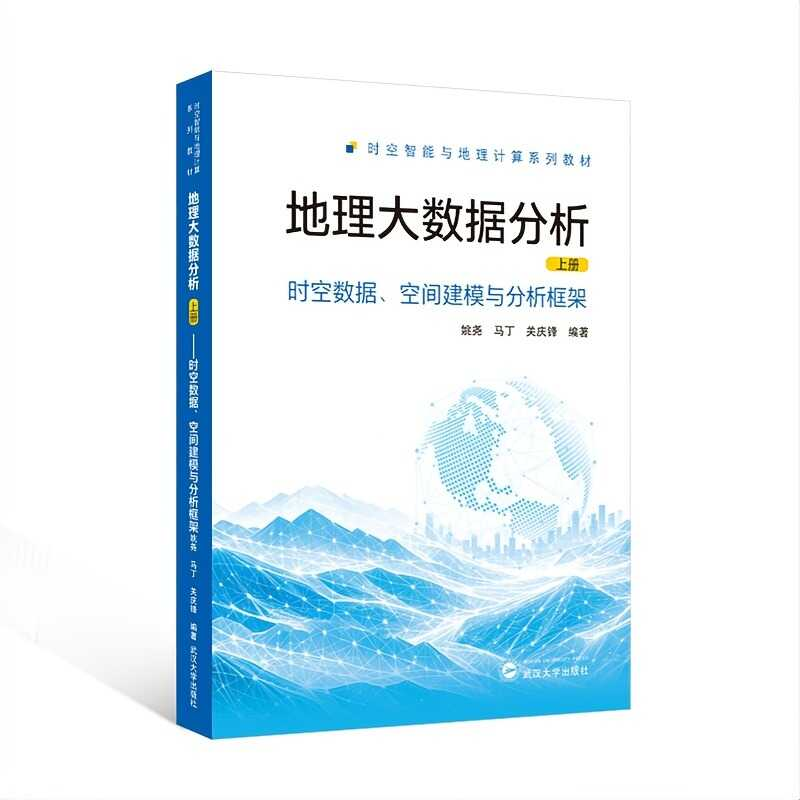
UrbanComp Lab在2025年持续深耕城市与乡村的空间智能研究,通过多源时空数据、地理大模型和计算方法,将宏观经济、城市运行与乡村发展转化为可观测、可分析、可解释的时空过程,致力于在同一认知框架下理解城乡空间的多样性与韧性。新的一年,团队将继续以数据连接现实,推动《地理大数据分析》教材出版,并寄语大家:既见高楼灯火,也望满天星辰——所谓世面,不过是世界的一面。
讲座报告 | 2025年12月23日未来城时空智能论坛
应关庆锋教授、姚尧教授邀请,华东师范大学黎夏教授、北京大学刘瑜教授、中南大学邓敏教授、武汉大学唐炉亮教授、北京大学黄舟教授和云南师范大学余柏蒗教授将于2025年12月23日上午未来城时空智能论坛为师生作学术报告
会议通知 | 2025 西丽湖论坛 “AI赋能智慧国土与城市治理研讨会”
西丽湖论坛于2020年起由科技部、教育部、广东省人民政府联合发文明确举办,打造国际化创新品牌。2025年西丽湖论坛以“科学智能(AIforScience,AI4S)”为主题。分论坛“AI赋能智慧国土与城市治理研讨会”将于2025年12月21日在北京大学深圳研究生院举行,由北京大学深圳研究生院城市规划与设计学院、中国地理信息产业协会智慧国土工作委员会、自然资源部陆表系统与人地关系重点实验室承办。
研讨会将聚焦探讨人工智能发展背景下智慧国土与城市治理的新理论、新方法、新技术与新应用模式。
Deep Learning Analysis of Gaza Settlements and Urban Sustainability
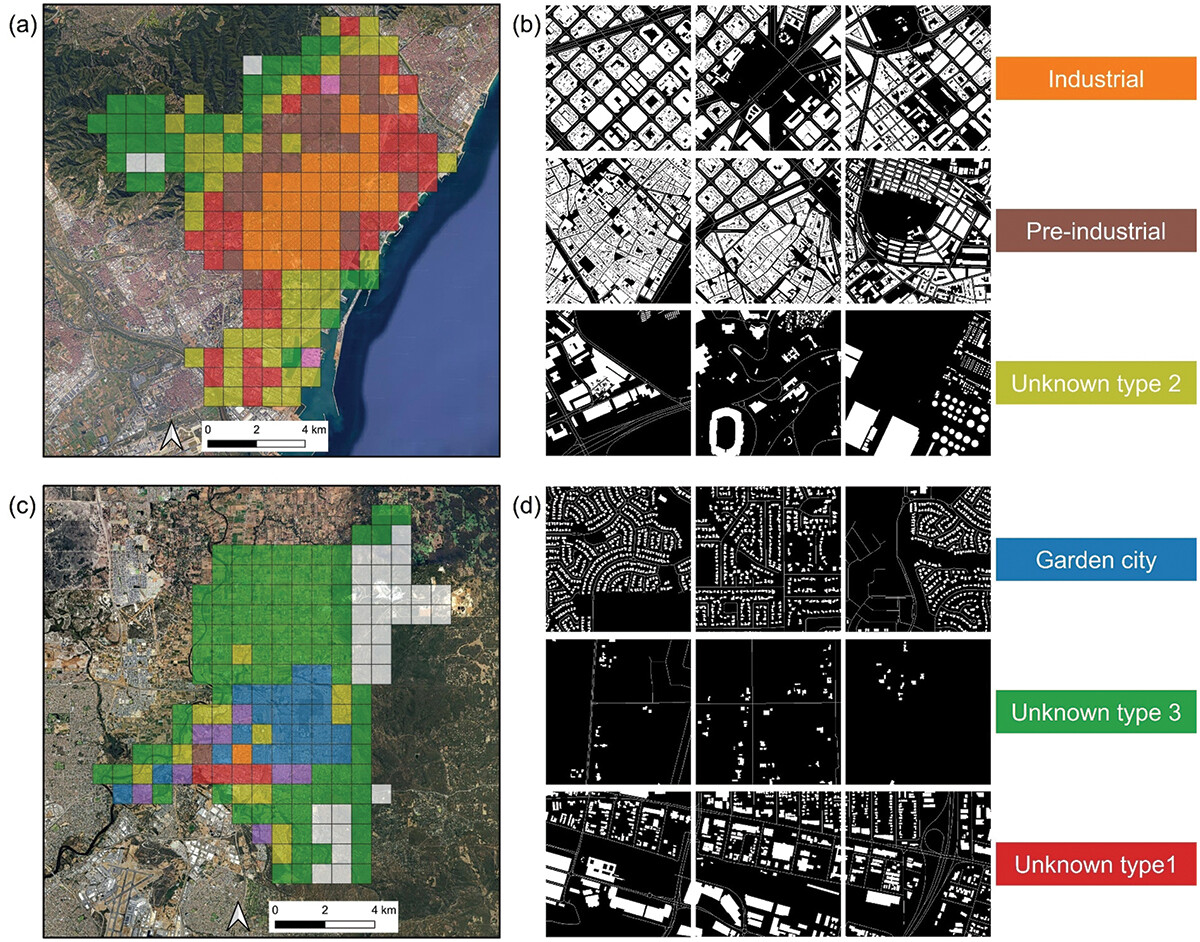
Title: Formal and informal settlements and corresponding demographic patterns in Gaza Strip: deep learning approach to urban sustainability
会议通知 | 第二十届地理信息科学理论与方法学术年会
第二十届地理信息科学理论与方法学术年会定于2025年11月21-24日在厦门举办。本次大会由中国地理信息产业协会指导,中国地理信息产业协会地理信息科学理论与方法工作委员会和集美大学联合主办,集美大学计算机工程学院和厦门理工学院计算机与信息工程学院承办。